Museum Kit: Greek Folk Toys
The Museum Kits of the Benaki Museum are traveling suitcases designed to bring the museum experience into classrooms across Greece. Drawing from the museum’s extensive collections in history, culture, and art, these kits allow students to engage with original artifacts or replicas, accompanied by educational texts, photographs, audio materials, PowerPoint presentations, and hands-on activities. By integrating museum learning into the familiar environment of a school, the initiative aims to spark curiosity, foster engagement, and prepare students for future visits to the museum.
Developed by the Benaki Museum’s Education Department in collaboration with specialists, the kits adapt academic knowledge for different age groups, aligning with contemporary educational methodologies. The first kit focuses on Greek Folk Toys, rooted in the Toys Museum collection, originally established through Maria Argyriadi’s donation.
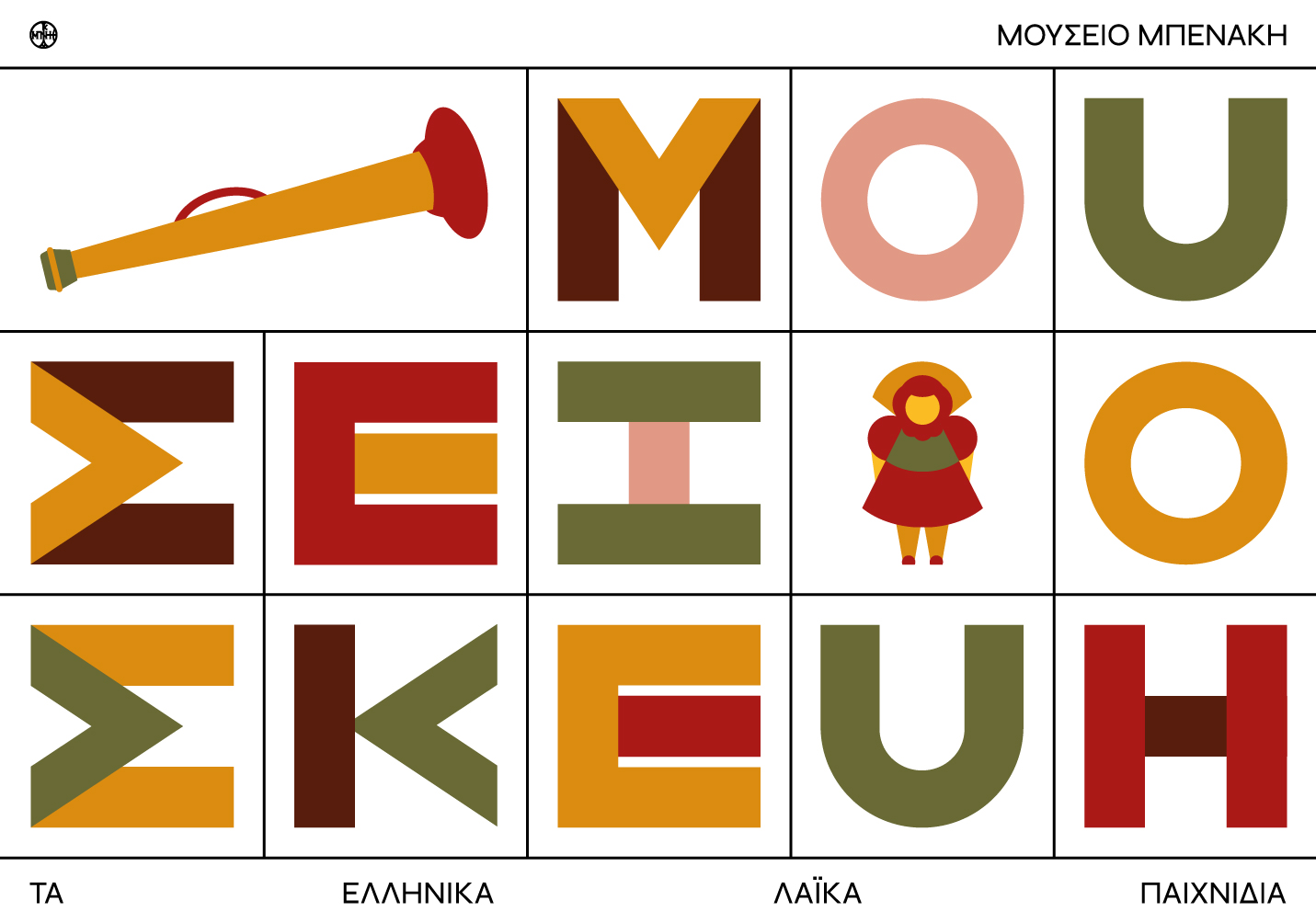
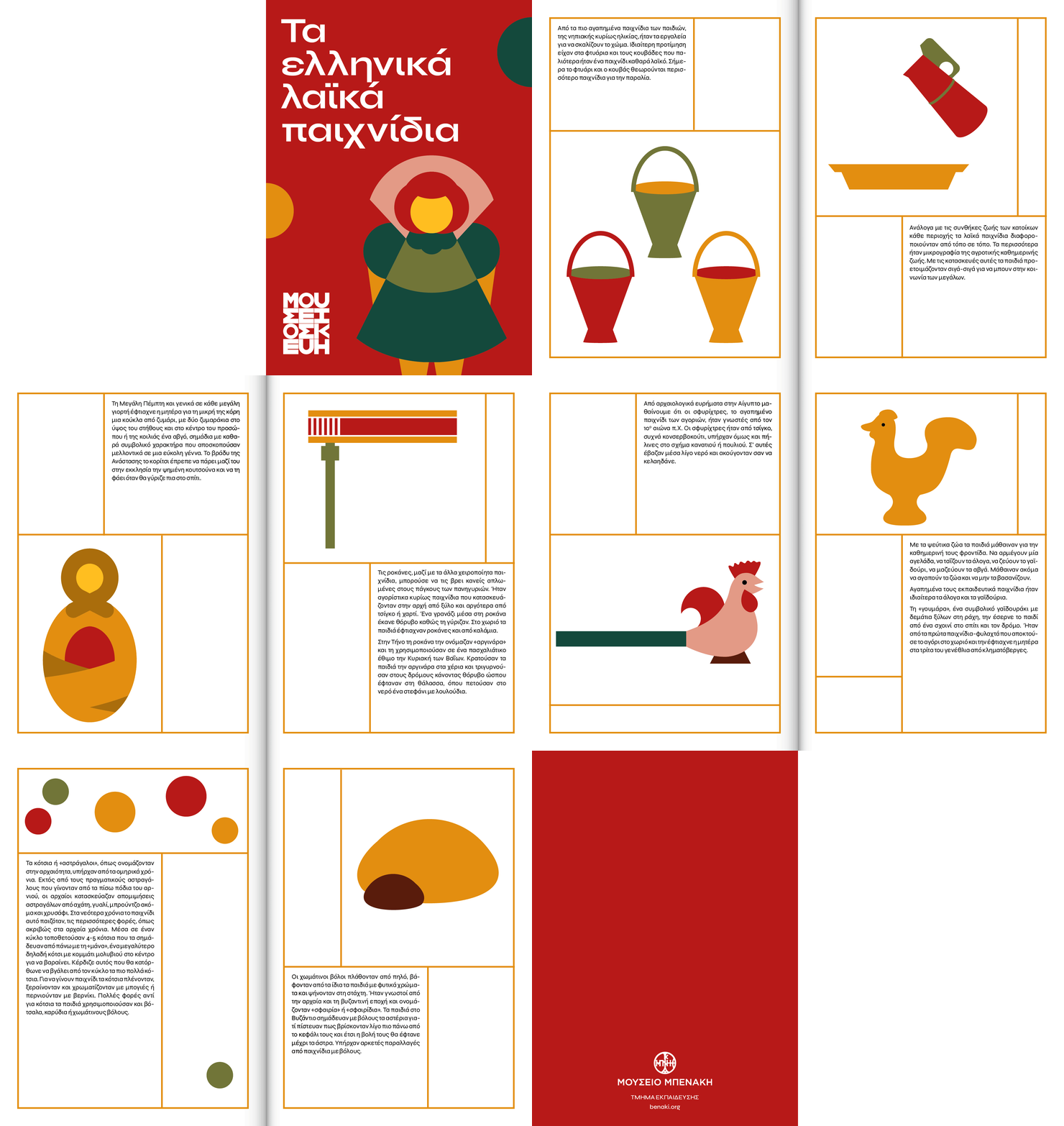
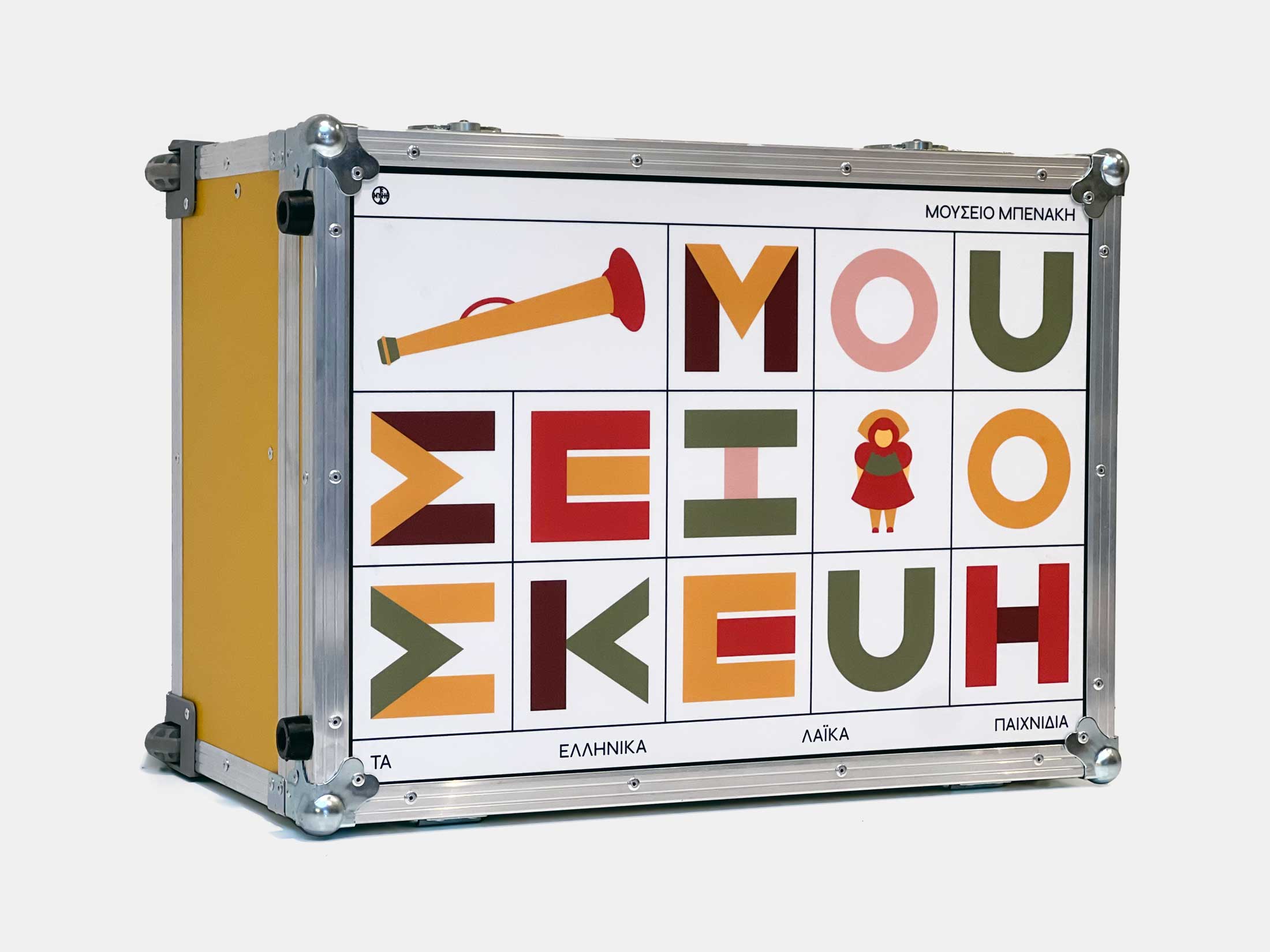
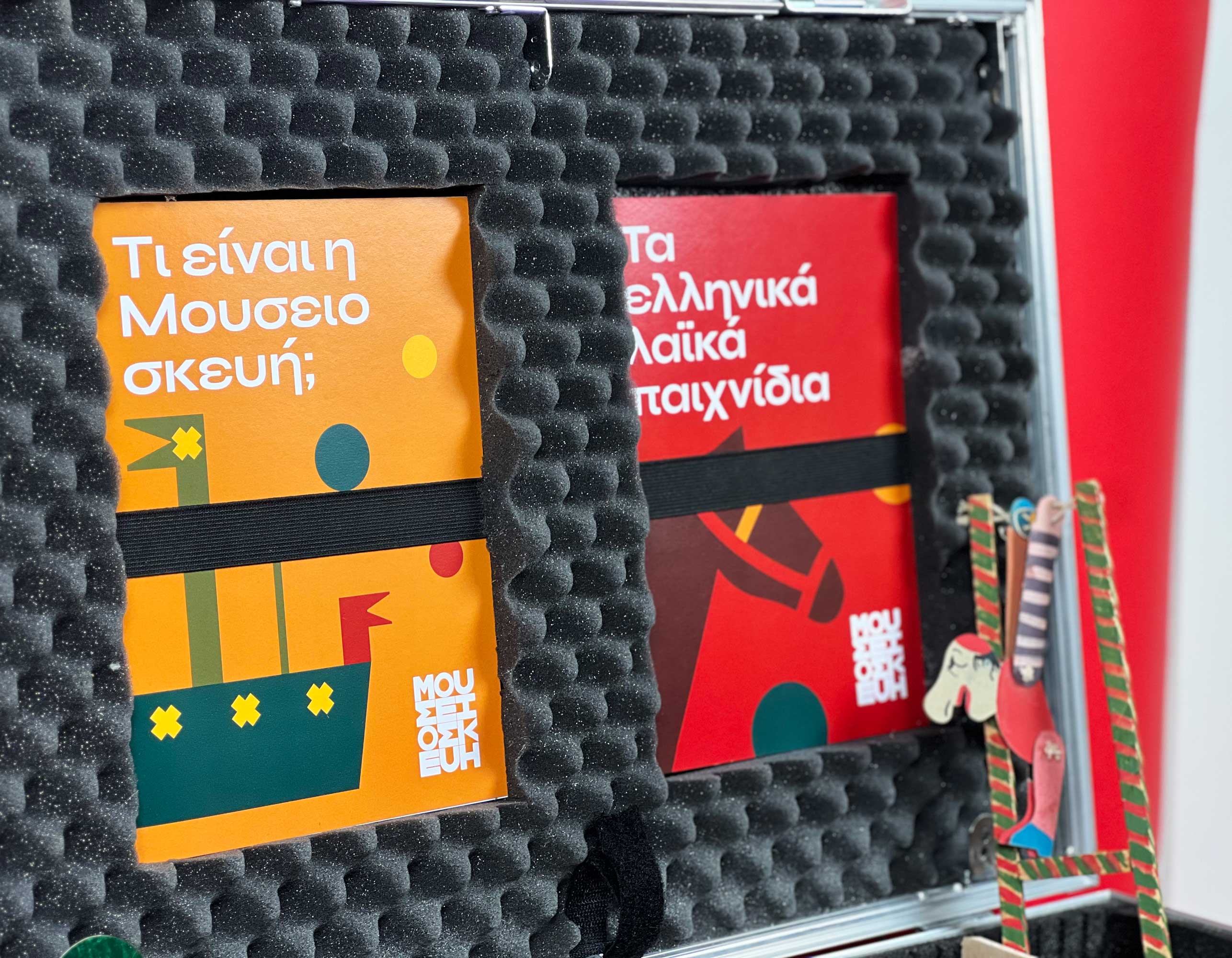
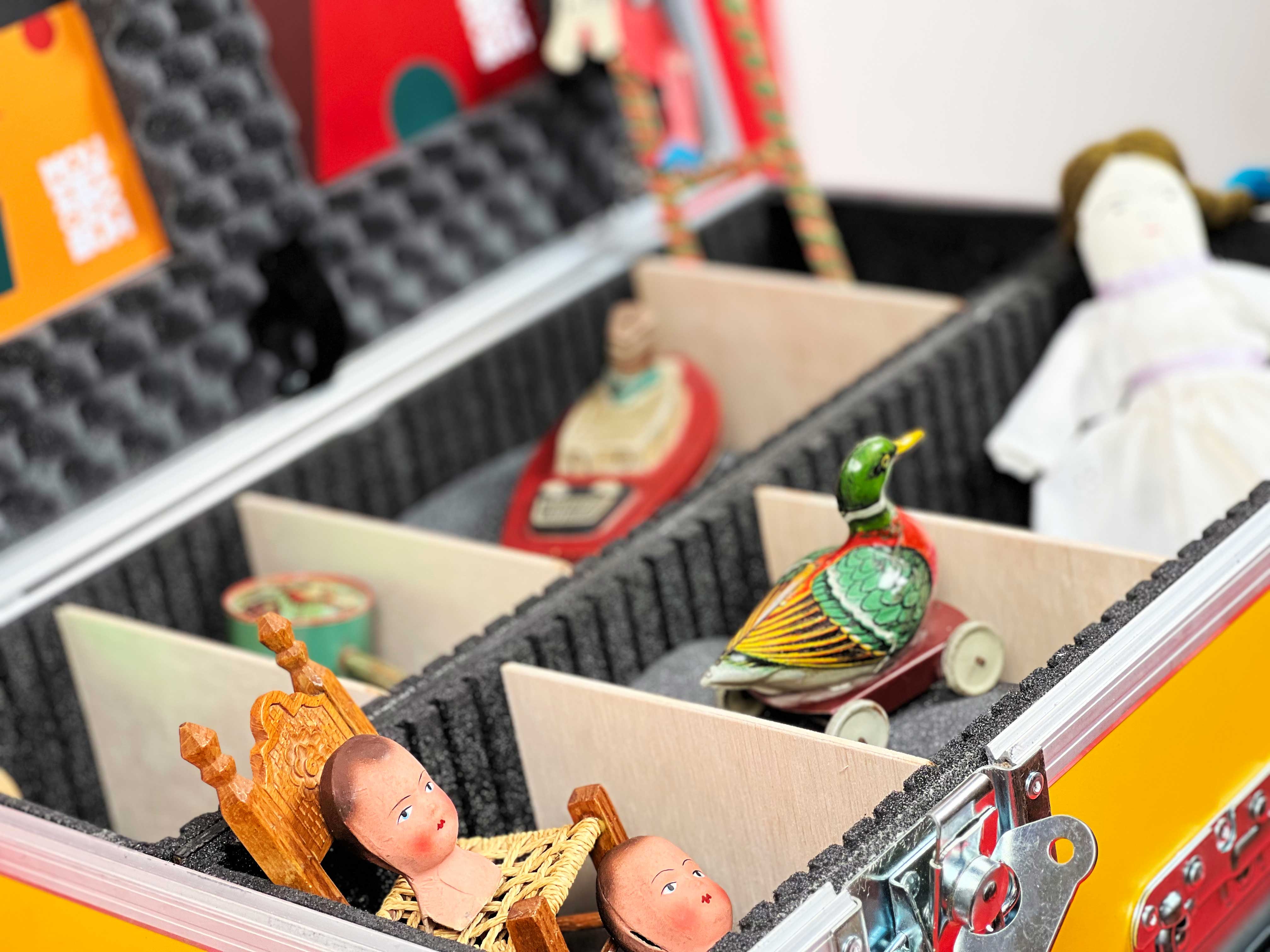
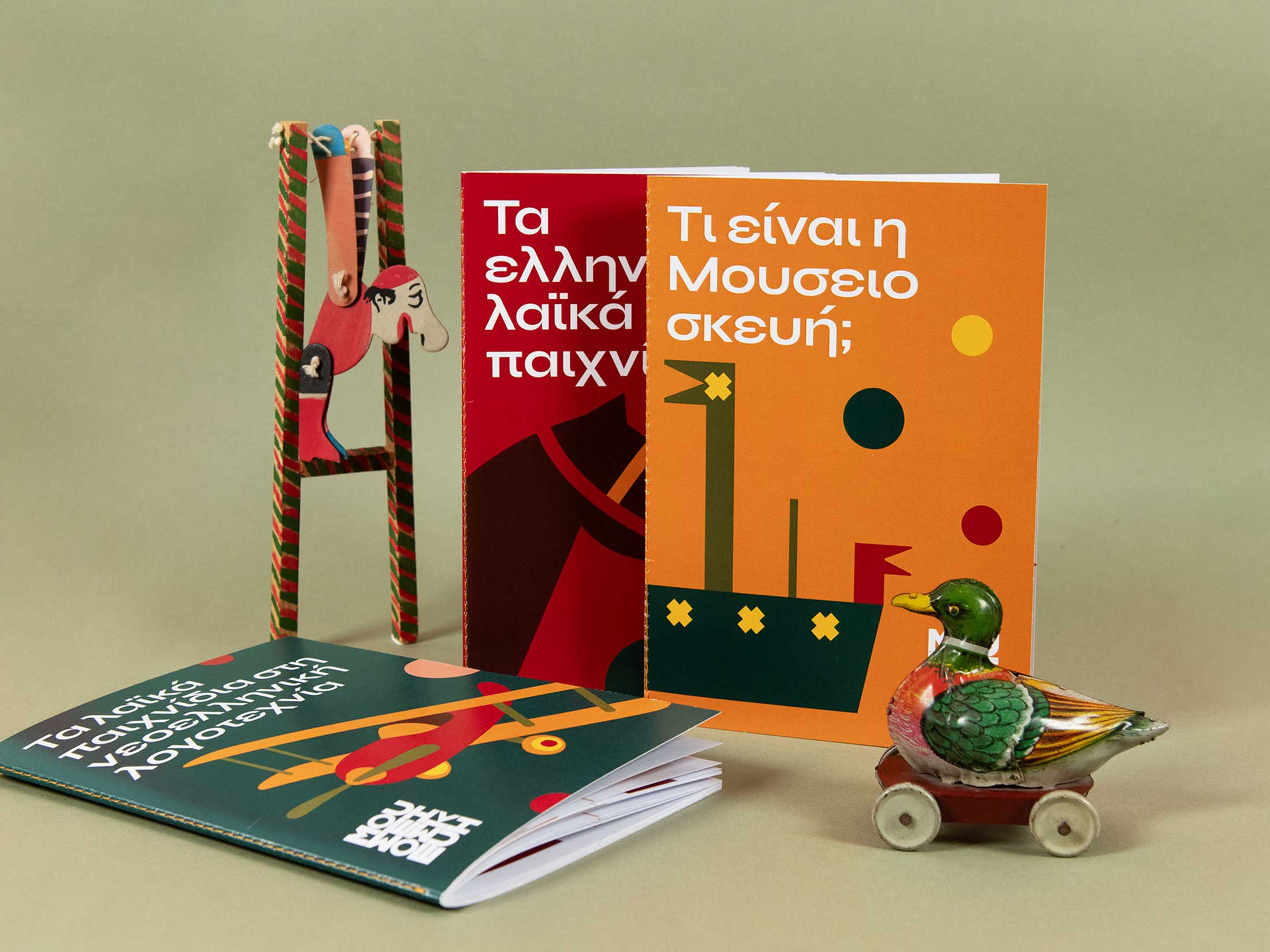
The visual identity is inspired by the concept of a display case (prothiki). The structured compartments within the suitcase, each designated for a specific toy, informed a flexible and modular design system. To highlight the cultural identity of the collection, a warm, earthy color palette was selected—evoking the tones found in traditional Greek painting, such as the works of Yannis Tsarouchis.
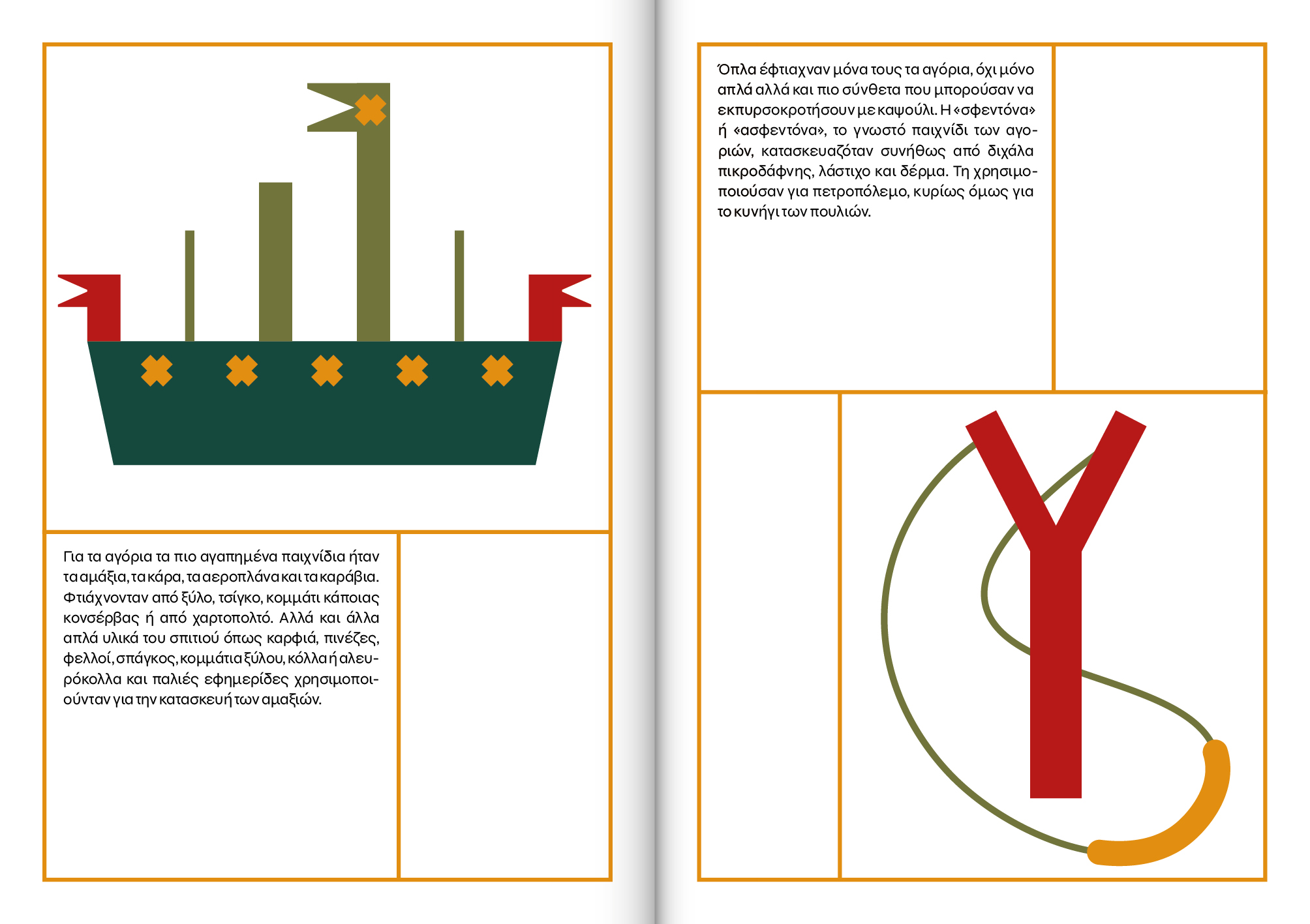
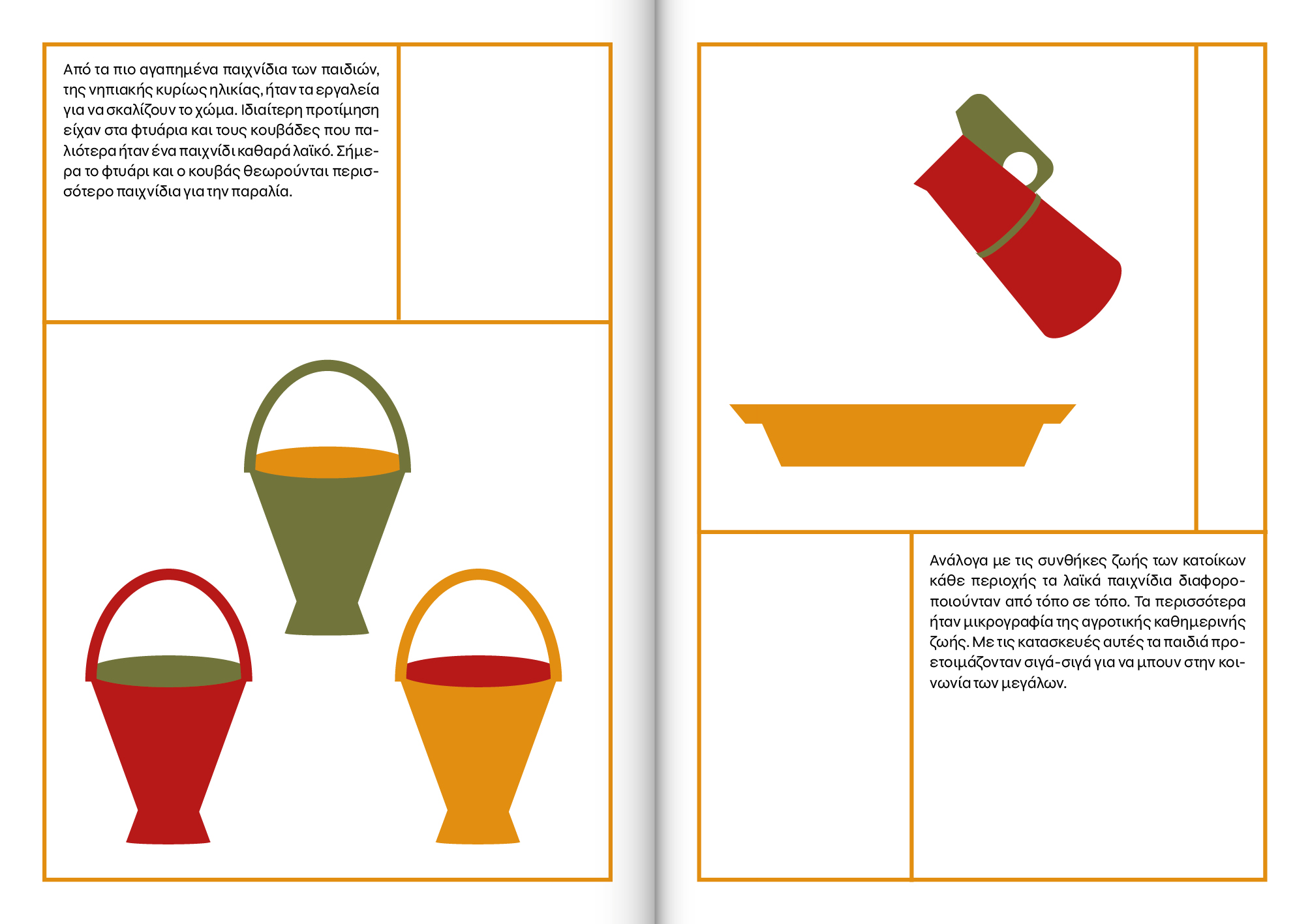
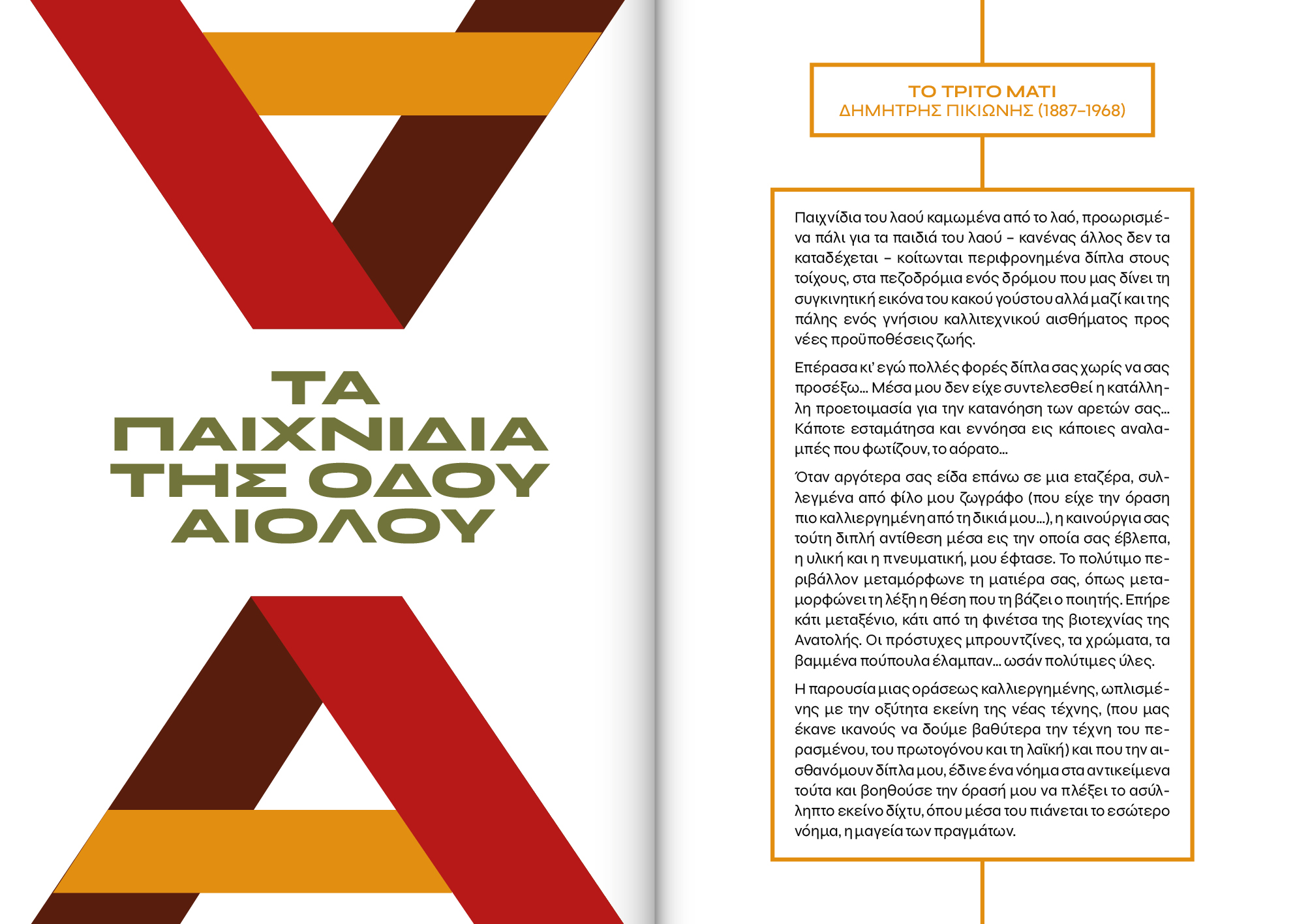
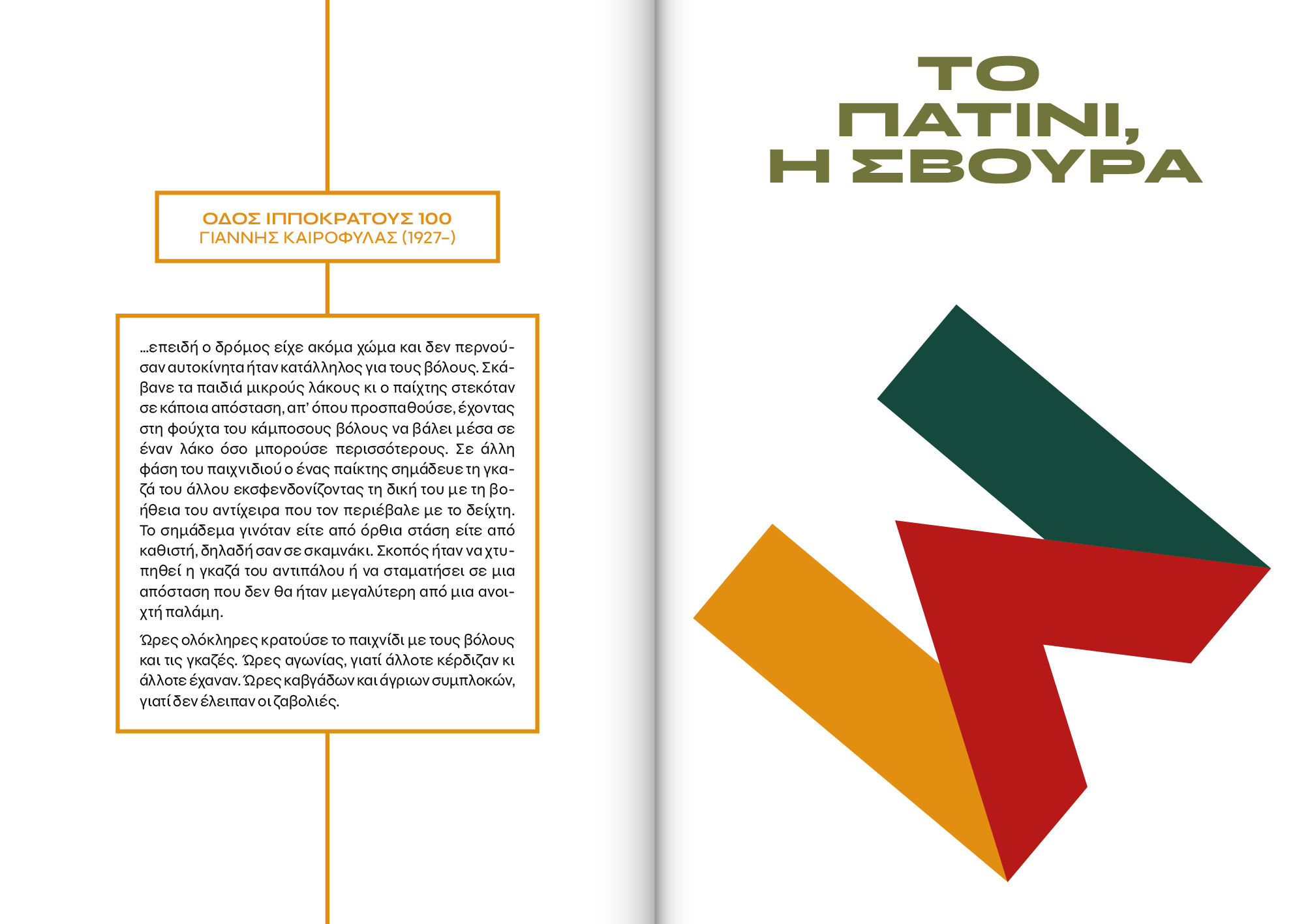
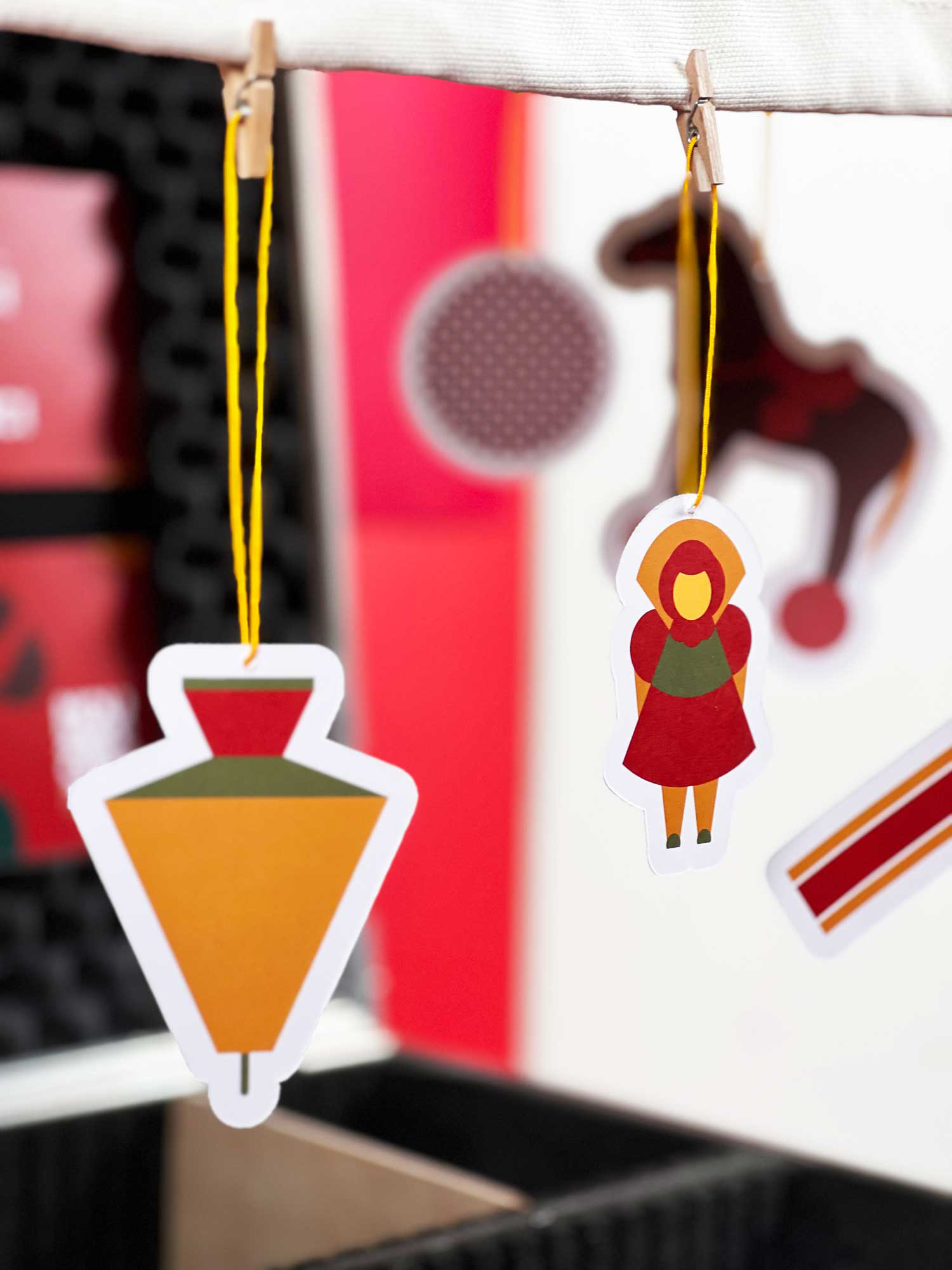
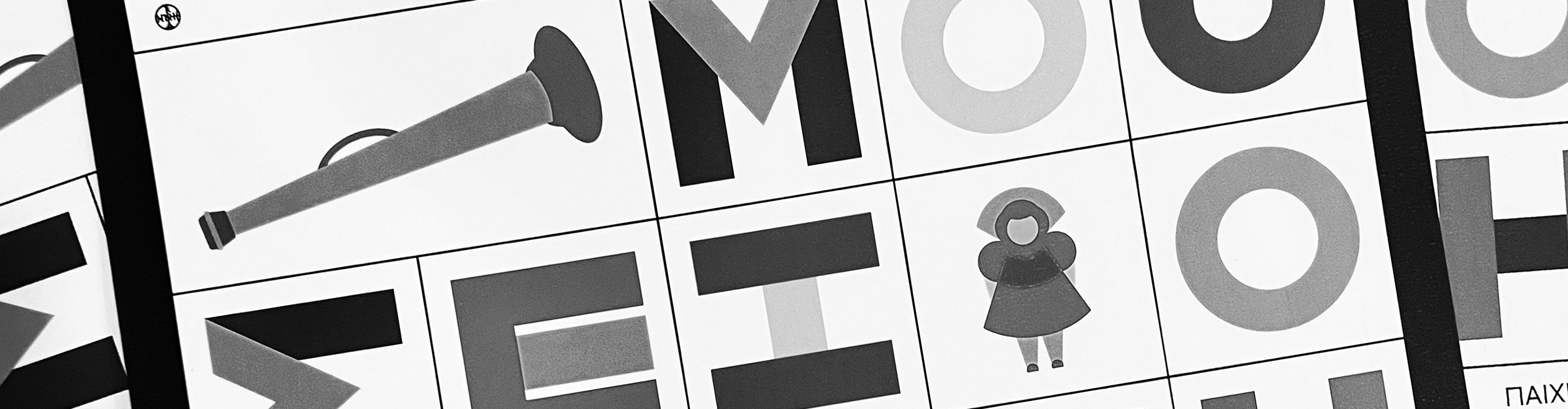
A custom modular typeface was developed for the logo, inspired by the interlocking nature of classic construction toys like LEGO, emphasizing the shape and form of each letter. The presentation of the toys was further enhanced through geometric illustrations, lending a contemporary aesthetic that resonates with younger audiences.
The exhibit design draws from the panigiras’ (festival vendor’s) stall, where traditional toys were once displayed. This concept was translated into an interactive structure: a miniature market stand attached to the suitcase, inviting children to participate in the setup by arranging the toys around the tented display. This ritualistic element not only echoes the museum experience but also introduces a tactile, participatory aspect—bridging storytelling, play, and cultural heritage.